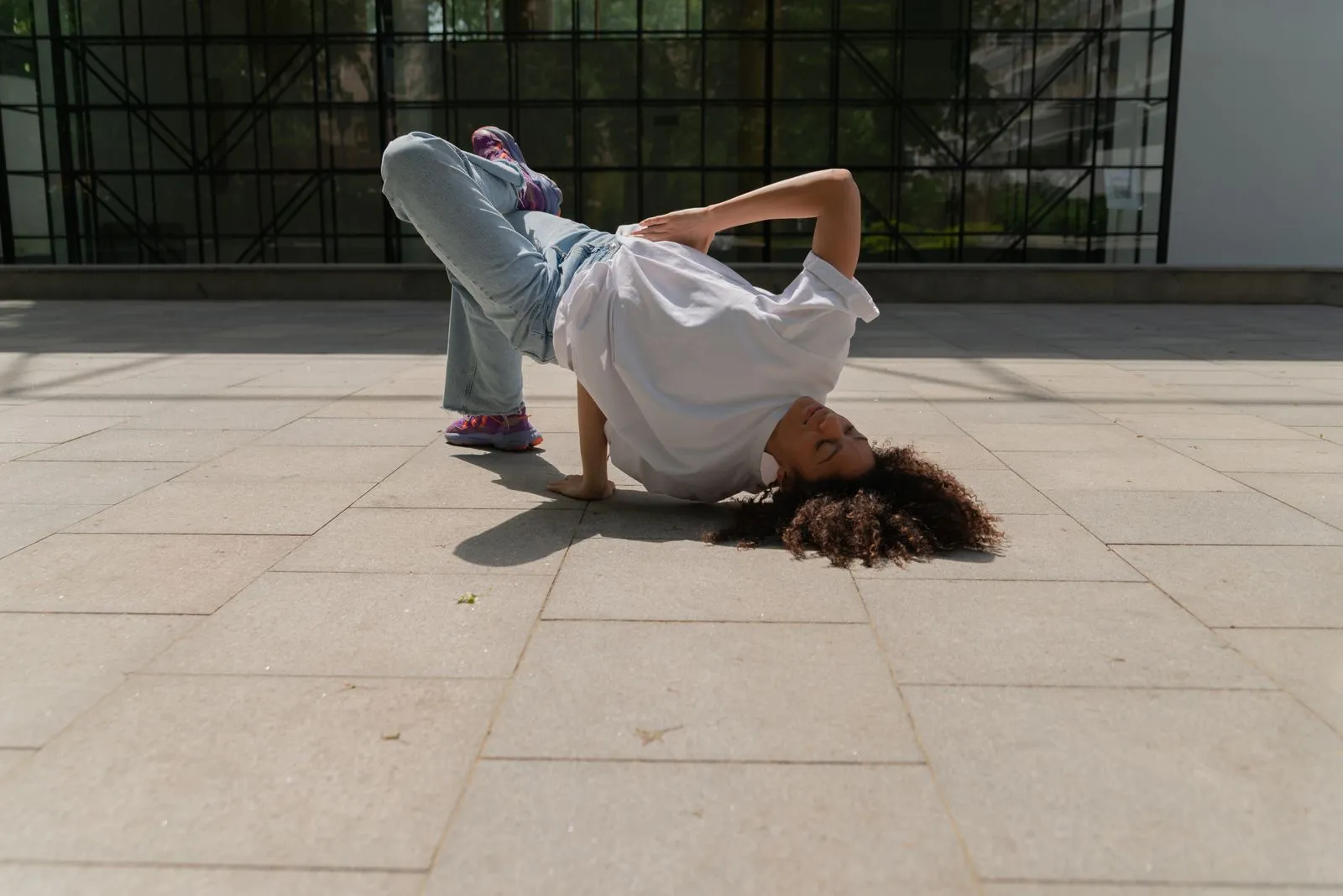
Your first breakdance class is a chance to explore movement, not prove what you can already do. Beginners usually start with basic rhythm, safe ways to move, and simple steps that build coordination. Wear comfortable clothes that let you bend and stretch, bring water, and arrive ready to ask questions. The instructor can adjust activities to your experience level, so it is fine to take breaks or watch a demonstration before trying a move.
Choose Comfortable Class Clothes
Wear a T-shirt or athletic top and pants or shorts that allow you to squat, reach, and move freely. Choose clothes that stay in place when you bend or turn. Avoid restrictive jeans, dangling accessories, and anything that could catch on the floor or another student. Dress in light layers if you tend to warm up quickly.
Clean sneakers with a flat, secure sole are a practical choice for many beginner classes. They should fit well and stay on during quick steps. Check with the studio before class because flooring and footwear preferences can vary. If you have a knee, wrist, or other movement concern, tell the instructor before starting so they can suggest suitable modifications.
Bring Water and a Few Essentials
Bring a water bottle and a small towel if you expect to sweat. Keep personal items, including your phone and keys, in a bag placed away from the practice area. You generally do not need special equipment for an introductory class, but confirm beforehand whether the studio asks students to bring anything specific.
Arrive a little early to check in, find the changing or storage area, and let the instructor know you are new. Share any injuries, physical limitations, or movement questions before warm-ups begin. You do not need to memorize dance terms or prepare a routine. Listening, asking for a demonstration, and moving at your own pace are enough.
Expect a Gradual Introduction
A beginner class often opens with a warm-up that raises your heart rate and prepares your joints and muscles for movement. The instructor may then introduce rhythm, basic footwork, balance, and ways to shift your weight. You may practice each piece slowly before putting steps together. The exact class plan depends on the instructor and the group.
Foundational breakdance skills can include toprock, which is upright footwork, and basic floor transitions. An instructor may also explain how to place your hands and control your body before you try moves closer to the floor. More demanding skills are usually broken into smaller parts. Do not rush into headstands, freezes, or power moves without instruction and appropriate preparation.
Learn Safely at Your Own Pace
You may repeat a simple step several times before it feels natural. That is a normal part of learning coordination and timing. Watch the instructor, practice one detail at a time, and ask for a slower demonstration if you need one. Taking a short break is sensible if you feel tired, dizzy, or uncomfortable.
Respect the space around you and wait for a clear turn when students practice individually. Follow instructions about where to move and how to share the floor. If a movement causes pain, stop and tell the instructor rather than trying to push through it. Progress comes from steady practice, not from attempting the most difficult move on your first day.
For your first breakdance class, bring comfortable clothes, secure sneakers, and water, then focus on learning the basics one step at a time. Let the instructor know you are a beginner and speak up about any concerns. When you are ready, contact Springs Breakdance Studio to ask about class options and what to expect.